
Take a magical tour of Ireland’s witchcraft heritage
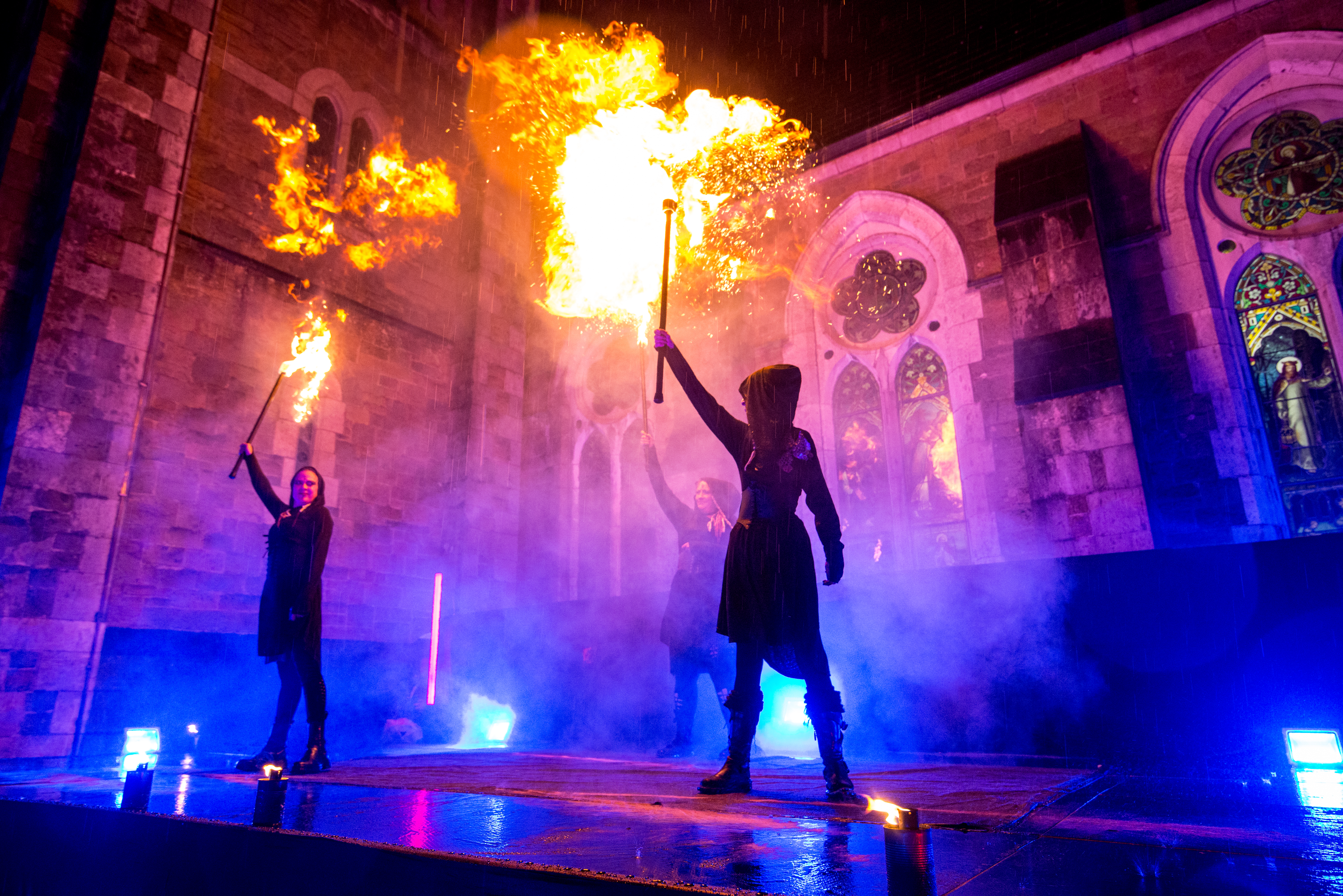
Samhain Chiarrai Festival, Co. Kerry
Witchcraft holds a special place in Irish beliefs. Tales of witches abound and Ireland's folklore and mythology is filled with powerful female figures associated with transformation and the Otherworld.
As Halloween approaches and Ireland harks back to the ancient festival of Samhain and the connection to the Otherworld, it is the perfect time to discover the places across the island that are associated with witches, goddesses, fairies and magic, and the many superstitions that still exist on the island today.
Ireland’s relationship with ‘witches’
Unlike many other countries, Ireland’s relationship with ‘witches’ was never one of persecution and fear. While hundreds of witches were being burnt at the stake in Europe and America during the famous witch hunts, only a few witch trials happened in Ireland with only two recorded executions.
The reason is the island’s deep and ancient belief in fairies, folk magic and wise women whose potions and spells could cure and enchant and who were revered rather than feared. Magic was part of everyday life and of a culture rich in storytelling, mythology and supernatural beliefs.
Start your witch trail in Kilkenny
The medieval city of Kilkenny is the place most famously associated with witches in Ireland and where you can step into the very heart of the fascinating story of Alice Kyteler. On a guided tour of the Medieval Mile, you will hear how Alice was accused of being a witch after her four husbands all died leaving her a wealthy woman. Alice managed to flee her fate, but her unfortunate maid Petronilla de Meath was tortured and burned at the stake in her stead. The tour takes you to Kyteler’s Inn, which dates from 1324 and was once owned by Alice. It’s a wonderfully evocative location where you can enter Alice Kyteler’s world.
As part of Kilkenny’s Home of Halloween Festival there will be several witchy Toil & Trouble events as well as a breathtaking street spectacle created by Macnas. This large-puppet parade will feature Alice and Petronilla as influential women of their time and present witches as a revitalising force.
Toil and Trouble Festival, Rothe House, Co. Kilkenny
Discover other sites associated with witches
The last recorded witch trial took place in Carrickfergus, Co Antrim, in 1711 and concerned accusations by Mary Dunbar against eight women and one man from Islandmagee, a peninsula on the north-east coast with rolling hills and a dramatic coastline. The women received short jail sentences but the man is believed to have been hanged, making him a rare male victim of witch hunts. A memorial stone marking the island’s last witch trial sits under a striking garden sculpture in Islandmagee Community Garden.
Two other ‘witches’ are remembered in the records. Florence Newton was an elderly beggar woman in Youghal, Co Cork, who was accused of bewitching a servant, but is thought to have died in jail before being sentenced. And in Co Clare, Biddy Early was a revered healer who was said to have powers given to her by the fairies. Even when the Church denounced her, she was not tried in court as none of the community would stand against her. Biddy’s ruined cottage still stands near Feakle and fans of her legacy report that it is a special place for quiet contemplation.
Visit the homes of Ireland’s powerful goddesses
Strong women are a recurring feature of Irish mythology and their shape-shifting entities are often associated with Samhain/Halloween.
The Morrígan rules over war and fate and in Irish stories often appears as a crow. Her home is said to be Oweynagat Cave, Co Roscommon, also known as the Gateway to Hell, which at Samhain opens to allow spirits to cross over from the Otherworld. You can visit the cave and find out more about Ireland’s mythology at nearby Rathcroghan Visitor Centre, located in an important archaeological landscape dating back 5,000 years. The area is also the setting for key parts of Ireland’s epic tale Táin Bó Cúailnge (The Cattle Raid of Cooley).
The powerful figure of Macha, goddess of sovereignty, gives her name to another major archaeological site on the island which also features strongly in Irish mythology. The award-winning Navan Centre & Fort, Co Armagh, explores the history and heritage of the area and delves into the tales of the Ulster Cycle and the famous curse bestowed by the goddess on the warriors of Ulster.
Co Kerry is the realm of the Cailleach, the goddess of winter, who shaped Ireland’s rugged landscape. She is the central figure in Samhain Chiarraí (15 October – 1 November), the county’s celebration of Halloween. Through storytelling events, fire spectacles and parades, you can come to know the Cailleach’s story and glimpse her power.
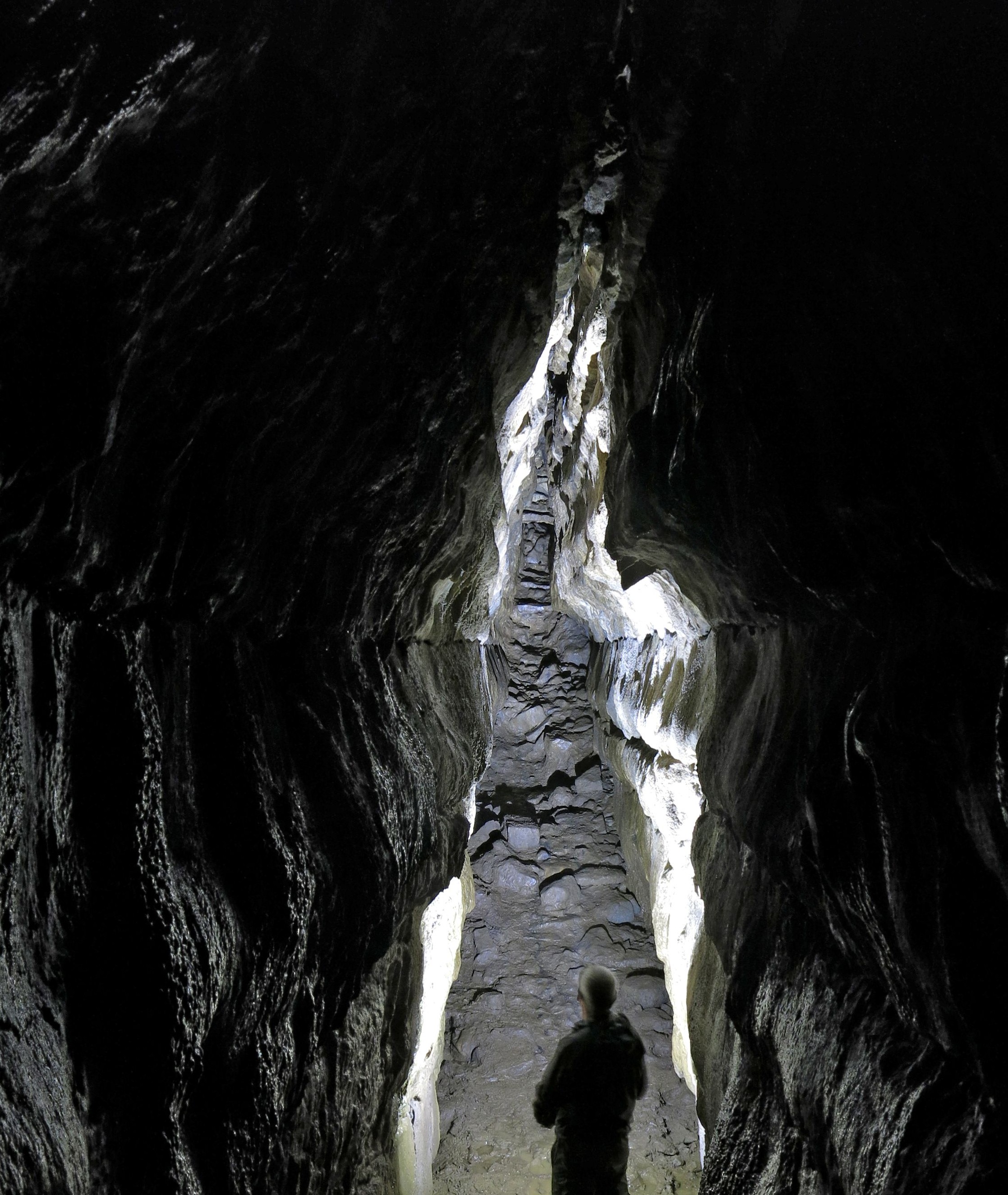
Oweynagat, Rathcroghan, Co.Roscommon
Piseogs, fairy forts and folk magic
While belief in witches and goddesses faded over the centuries, for long years, particularly in rural areas, the Irish held fast to beliefs in fairies, piseogs (spells or superstitions), blessings and charms.
Good luck and bad luck were linked to appeasing the fairies – the Aos Sí, descendants of the Tuatha Dé Danann, a supernatural race in Irish mythology who were driven underground by invaders. Across the Irish landscape you can see evidence of this appeasement: a lone hawthorn tree left standing in a field has been preserved as a home for the fairies; ancient archaeological remains such as ringforts and hillforts are considered to be magical fairy forts. Customs such as leaving out food for the fairies or using protective charms to ward off their malevolence abound. And to this day, people will swear they heard the wail of the Banshee (from bean sí meaning fairy woman) before they were told of a bereavement.
But it was not only the fairies you had to be wary of. Piseogs were charms enacted by those who wished ill on someone else and could range from burying rotten eggs on a neighbour’s land to cast misfortune on them to stealing a sheaf from their harvest. The term also covers local superstitions and wherever you go in Ireland you will find someone who will enthusiastically share examples of these.
Amidst all this superstition, wise women in Ireland remained a source of solace, creating protections, cures and remedies for misfortune. The idea of ‘witchcraft’ belonged not in the supernatural but in the everyday.