
Following Ancient Footsteps Through the Boyne Valley
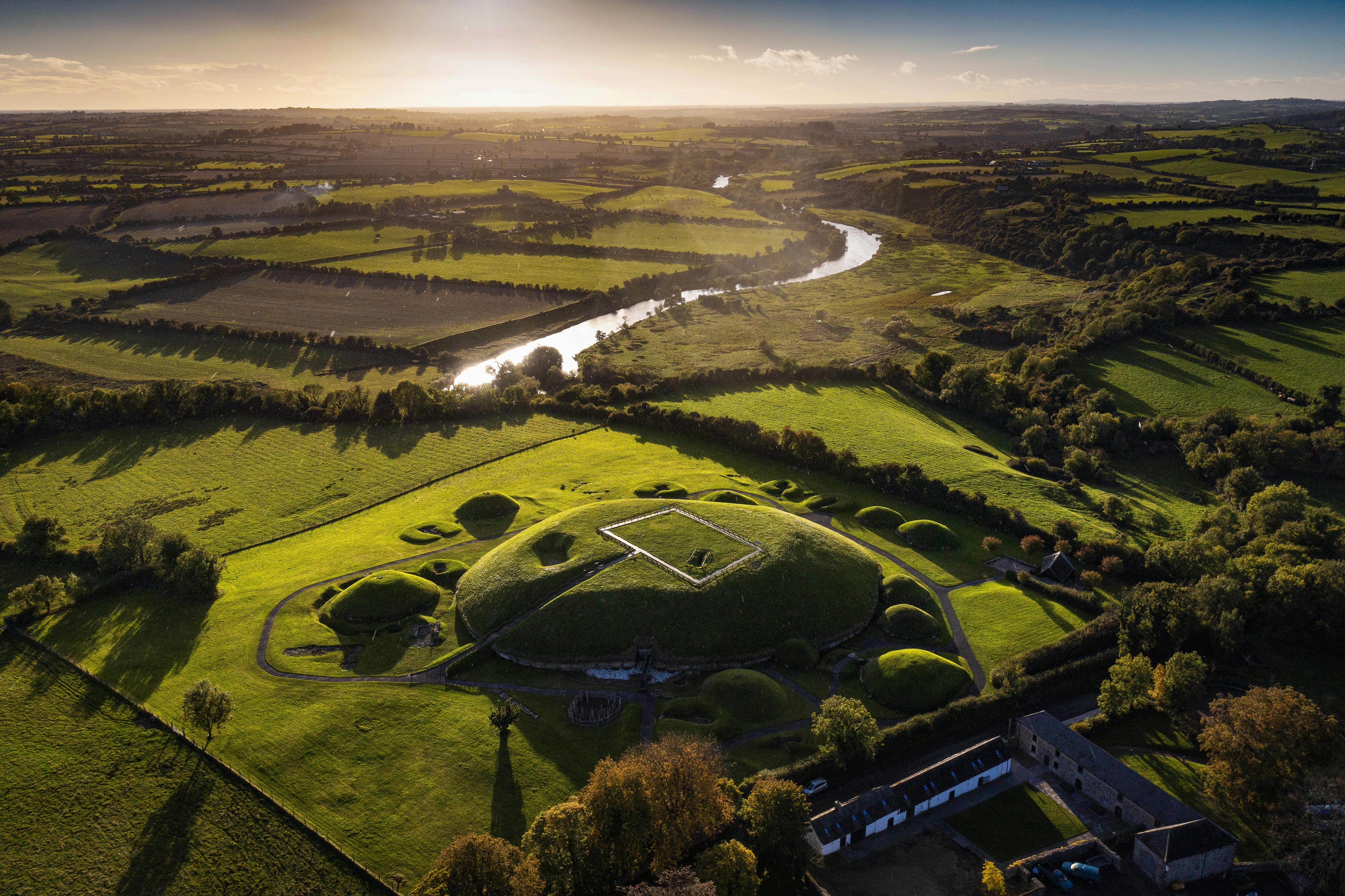
Knowth & River Boyne, Co Meath
In Ireland’s Ancient East, the landscape and its stories are closely connected. In the Boyne Valley, that connection is especially clear, where mythology, history and everyday life continue to overlap.
One of the best-known examples is the Táin Way, based on the story of the Táin Bó Cúailnge. The legend, centred on Queen Medb’s cattle raid and the warrior Cú Chulainn, has long been part of Ireland’s cultural identity. Today, the trail traces that journey across counties Louth and Meath, passing through landscapes linked to the story.
Now marking 40 years since it was first established, the 40km (25miles) Táin Way remains one of Ireland’s more distinctive long-distance routes. It moves through farmland, quiet roads and open countryside, but what sets it apart is the layer of meaning behind it — a route shaped as much by storytelling as by geography.
That relationship between place and narrative continues across the wider Boyne Valley, particularly along the Boyne Camino. Inspired by the tradition of European pilgrimage routes, the Camino follows the River Boyne through a region shaped by centuries of settlement, belief and conflict.
Starting in Drogheda and looping through the surrounding countryside, the route takes in a number of historically significant sites. Among them is the Battle of the Boyne, fought in 1690, but the area’s story stretches much further back, with early Christian sites and long-established crossings along the river.
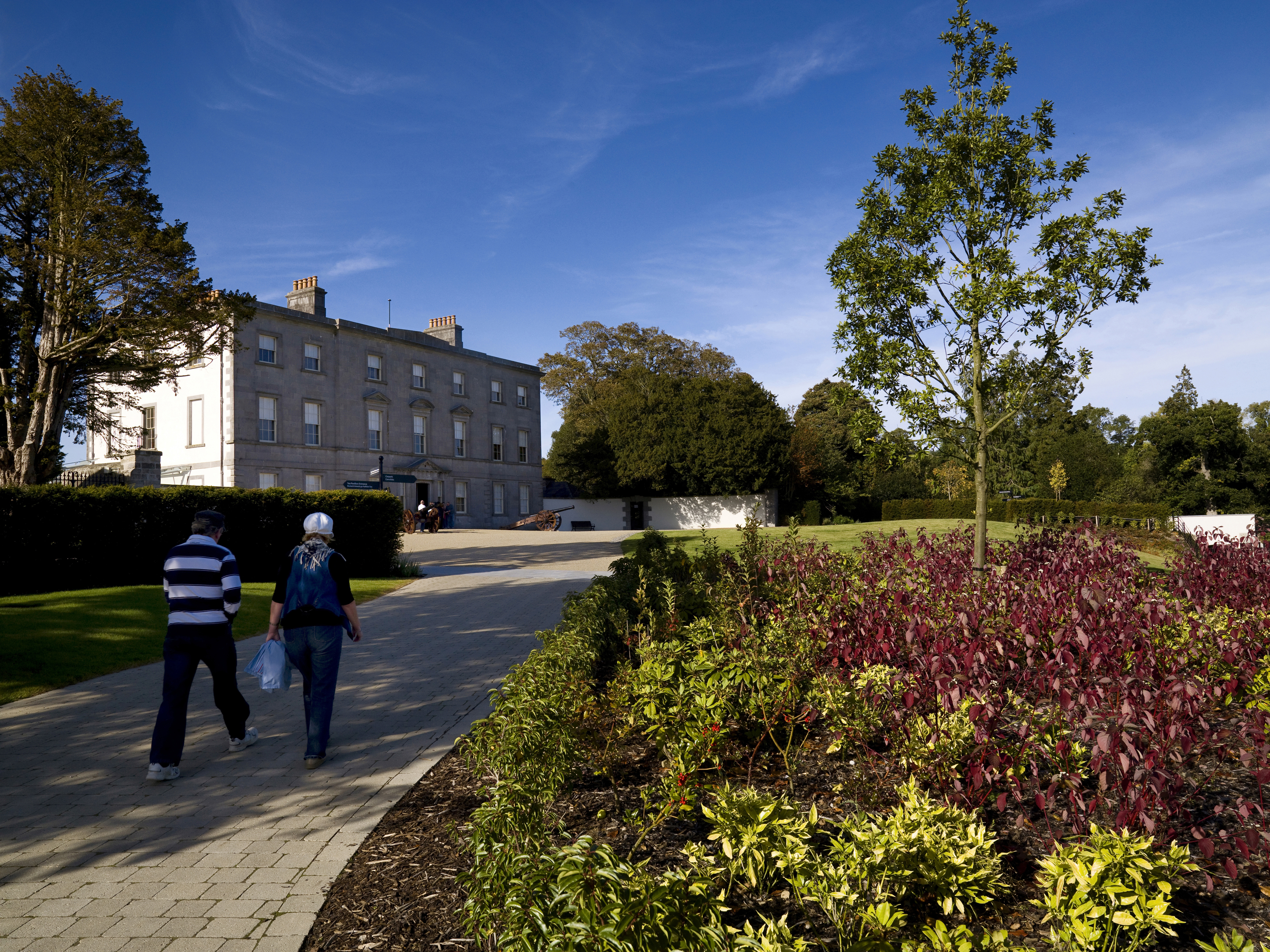
Oldbridge House, Battle of the Boyne Visitor Centre, Drogheda, Co. Meath
The Boyne Camino combines relatively gentle walking with a strong sense of place. Much of the route follows the river, offering a steady, accessible journey through the landscape, while also reflecting the idea of pilgrimage, moving with purpose, even at a slower pace.
Both the Táin Trail and the Boyne Camino form part of the Boyne Valley Trails September Festival, which runs from 1st to 23rd of September and brings together a programme of guided walks and outdoor activities across the region.
Based around Drogheda, the festival provides a way to explore the area through a mix of experiences. Alongside guided trail walks, there are opportunities to take part in heritage tours, myths and legends walks, and Nordic Walking sessions suited to different levels.
The programme also includes ways of experiencing the landscape beyond walking. The River Boyne can be explored by kayak or paddleboard, while the coast and inland waterways offer opportunities for wild swimming. There is also a growing focus on wellbeing, with sessions such as breathwork and sound bathing held in outdoor settings.
Food and culture also play a role, with locally led tours that connect visitors to the area through its produce and traditions.
Drogheda further leans into the history of the region with the Lú Festival of Light, Ireland's largest outdoor urban animation festival from 24th to 27th October, part of the Home of Halloween celebrations. The festival sees Ireland's greatest myths and legends come alive on some of Drogheda's landmark buildings, including The Morrigan, Goddess of Death and prophecy, and the tragic battle between Cu Chulainn and Ferdia.
One of the strengths of the Boyne Valley is its scale. Within a relatively small area, it’s possible to move easily between coastline, river, countryside and heritage sites. That variety is reflected in the festival, where visitors can shape their experience — from longer guided walks to shorter, more relaxed activities.
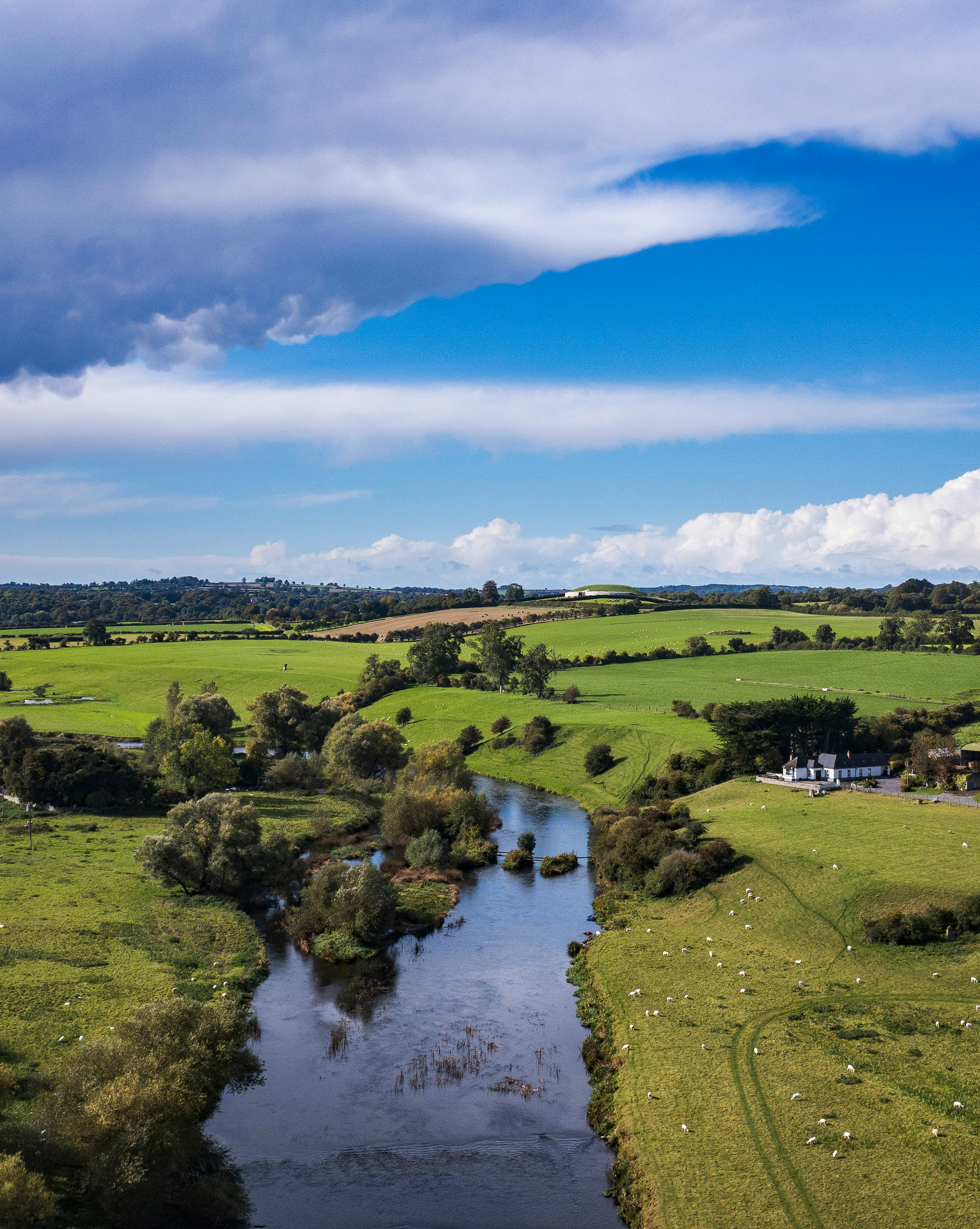
River Boyne & Countryside_Co Meath
Across all of it, the same idea runs through: exploring the landscape by engaging with it directly. Whether following the route of an ancient legend, walking alongside the river, or experiencing the area from the water, the focus remains on connection; to place, to history, and to the stories that continue to define it.
For more information on Boyne Valley Trails September Walking Festival see www. boynevalleytrails.ie or see Ireland.com for more on the region.