
Donegal Tweed on the Brink of Prestigious EU Craft Recognition
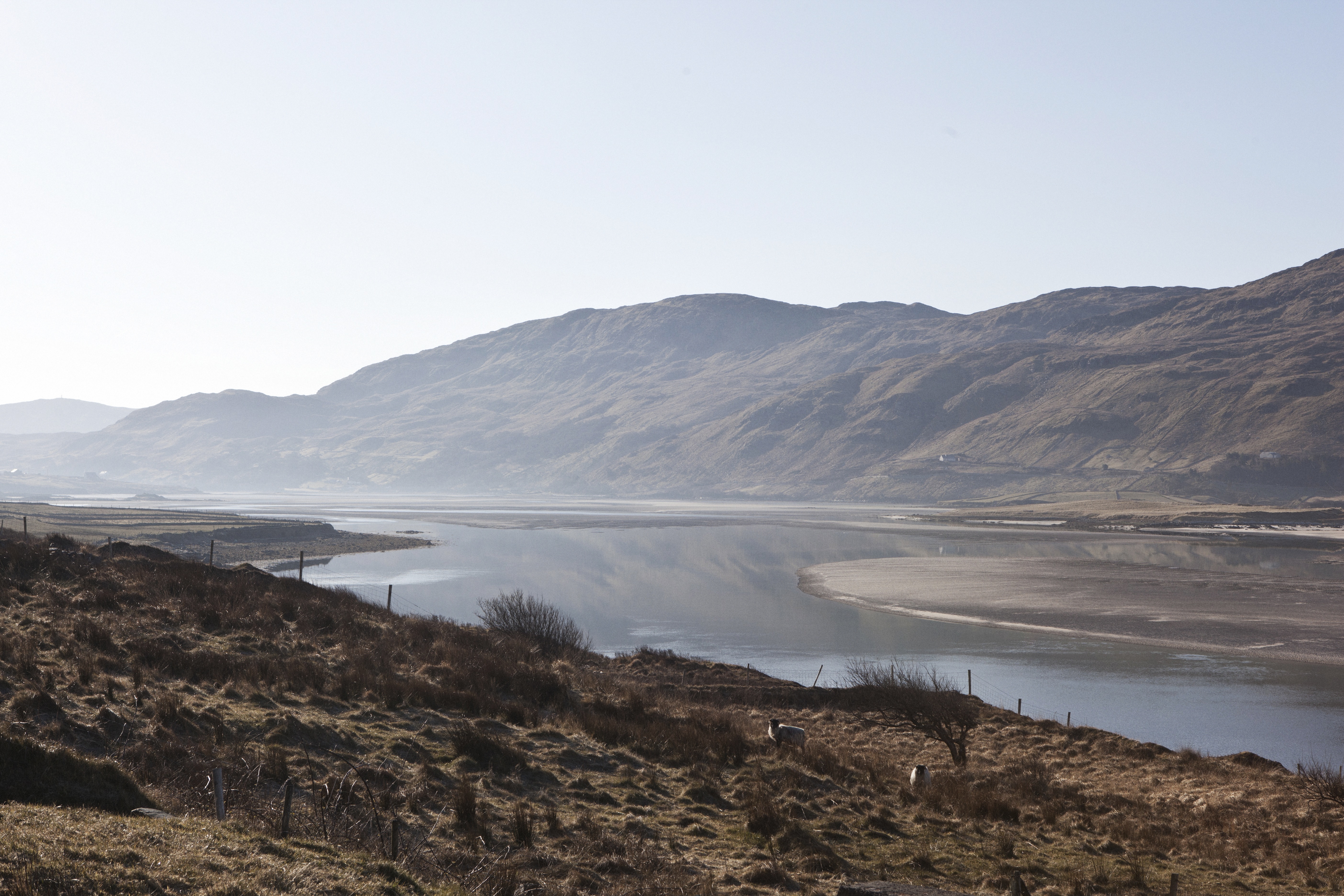 The Donegal landscape inspires the fabrics made by Molloy & Sons
There are many things to love about County Donegal on the Wild Atlantic Way: sea cliffs tumbling towards the green-blue sea, the rich browns of bracken and bog, yellow gorse and purple heather and moss-covered walls. The landscapes here are evocative and haunting, from the silver-white slopes of Errigal mountain to the blazing shades of the sunsets at Fanad Lighthouse. Maybe it’s no surprise then that we find these tones and textures echoed in one of the world’s most famous fabrics – Donegal Tweed.
With a tradition that stretches back centuries, Donegal Tweed summons images of blazers and suiting, flat caps and classic coats in woollen fabrics with a colourful fleck or “nep”. Woven in traditional patterns such as “pepper and salt” and “herringbone”, these rich fabrics reflect the landscape from which they come and the lives of the people who live here.
Woven into each bolt of Donegal Tweed is a story of landscape, family and heritage skills. And, with the new EU Craft and Industrial Geographical Indication (CIGI) about to be adopted by the Irish government, Donegal Tweed looks set to gain legal protection as a product intrinsically linked to both place and people.
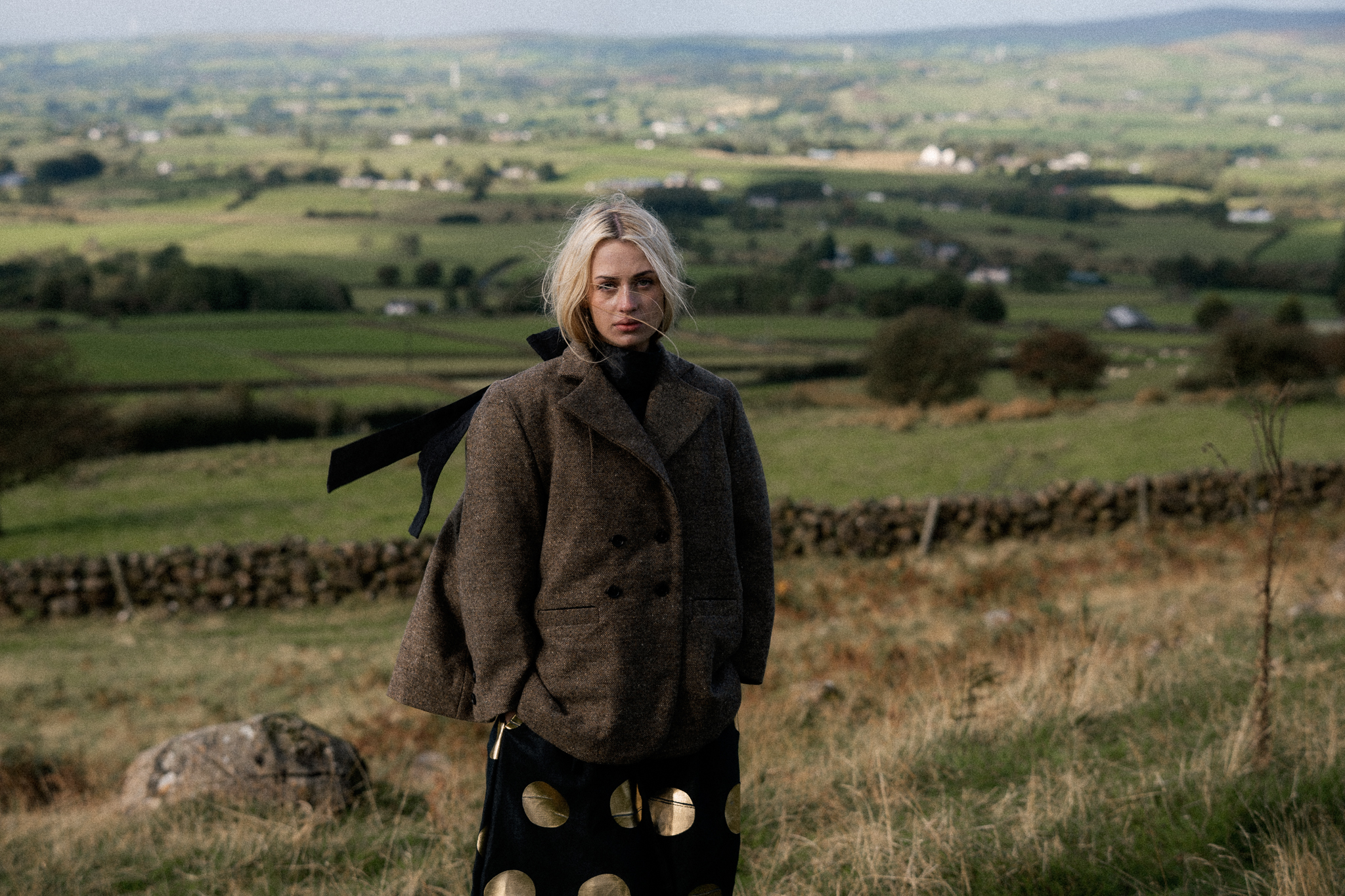
Brown Tweed Jacket by Kindred of Ireland. Tweed by Molloy & Sons.
In recognition of craft
Ireland currently has 13 food and drink products recognised by EU intellectual property legislation. Since December 2025, new EU rules have aimed to protect products such as Donegal Tweed and Connemara Marble in the same way that Irish food products – the Waterford Blaa, Clare Island Salmon, and Irish whiskey – are protected. Gaining CIGI recognition for Donegal Tweed would mean that a fabric made in a similar style, but not produced in County Donegal, could not be called “Donegal Tweed”.
According to Mary Blanchfield, CEO of the Design & Crafts Council Ireland, the assignation of a CIGI for Donegal Tweed will be a landmark moment for producers of the fabric and will have a positive impact on the county in terms of craft tourism, local employment and the preservation of heritage skills. In January 2026, Blanchfield facilitated the EU Capitals Craft and Industrial Geographical Indication (CIGI) conference at Dublin’s RDS in parallel with the Showcase Ireland trade fair, which has been bringing Irish craft and design to retail buyers for over 50 years.
Members of the Donegal Tweed Association – Molloy & Sons, Magee 1866, Studio Donegal, McNutt of Donegal and Eddie Doherty – produce unique fabrics, used by high-fashion houses and local designers alike, that are the antithesis of mass production, copy culture and fast fashion.
“CIGI certification provides an opportunity for us to protect the rich heritage of Donegal Tweed, to promote it and to maintain a future legacy,” says Rosy Temple, CEO of Magee 1866. “Seeking this recognition has allowed us to come together with other mills in the county to work as a sector to safeguard the skilled and often intergenerational work that goes into producing Donegal Tweed.” Temple is one of the fifth generation of her family involved in weaving and selling tweed products; her brother Patrick is CEO of Magee Weaving, and her sister, Charlotte, is creative director of Magee 1866.
“GIGI will be positive in terms of bringing a local, natural product to an international audience and in giving consumers confidence that they know who and what is behind the product,” says Temple, whose family’s products can be found at their stores in Donegal town, South Anne Street in Dublin and at Arnotts department store.
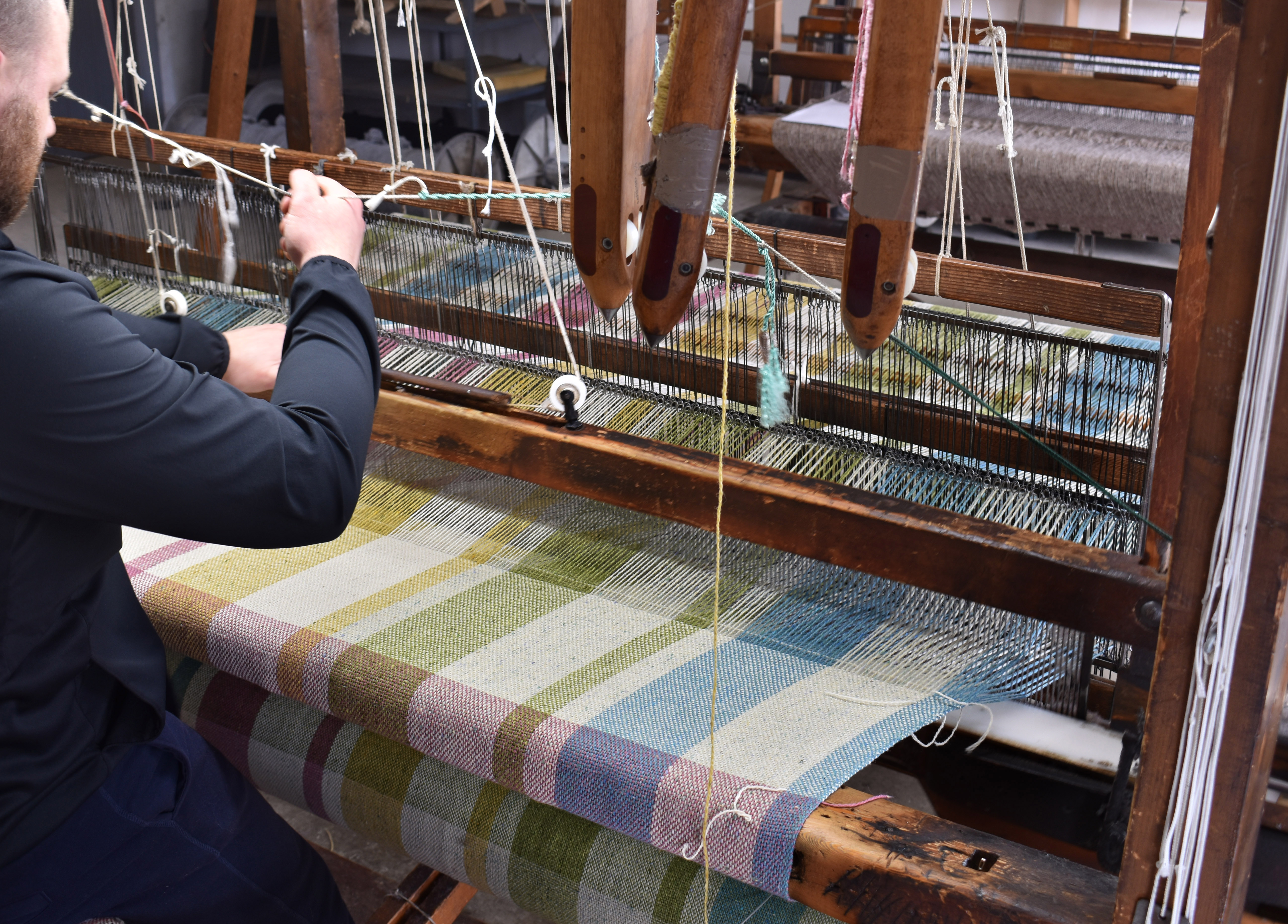
Weaving fabric at Studio Donegal.
Contemporary cool meets traditional heritage
Designer Amy Anderson, founder of Kindred of Ireland, is a fan of the fabric: “Donegal Tweed is one of the great heritage fabrics of this island, deeply connected to its people, history and landscape,” she explains. “For me, it cuts to the core of why we created Kindred of Ireland – to take our incredible heritage fabrics and make them modern, relevant and even a little cool again.”
This season, Anderson’s Keeper Coat, lined with beetled Irish linen, is a playful interpretation of a traditional tailcoat; while her Tweed Jacket, cut with a boxy fit, features a linen bow at the back. Both designs utilise tweed from sixth-generation weavers Molloy & Sons. “That balance of strength and gentleness, heritage and modernity, is what keeps me coming back to Donegal Tweed every season,” Anderson says.
Founder of her eponymous brand, Aoife McNamara runs Ireland’s first B-Corp fashion label and last year showed her designs at Ballynahinch Castle during Ireland Fashion Week. “There is so much happening in Donegal in relation to textiles; you’ll find an incredible cohort of weavers and makers there,” she says. “Donegal Tweed is a rare thing. I believe that geographical indication will encourage more people to visit the region and to buy these beautiful products.”
Visiting the place that tweed comes from is one way to connect with this unique fabric. As well as visiting locations, such as Maghera Beach, Granny Glen, An Port and Glencolmcille, which have inspired Molloy & Sons whose tweed mill is located in the small town of Ardara, there are also opportunities to visit mills themselves.
Studio Donegal did not set out to become a visitor attraction, but tourists nonetheless flock to this working mill in Kilcar, near the majestic Slieve League cliffs. “We have become a huge draw for the visitor seeking an authentic traditional handweaving experience,” says Anne Donaghy at Studio Donegal, where master weavers handweave throws, blankets and the fabric that goes into their garments.
“Most of the small tour operators in Donegal have us on their ‘must visit’ list,” explains Donaghy. “CIGI certification will preserve an indigenous industry that is providing employment in a rural area. As a handweaving operation, whose aim is to preserve a traditional craft, it will also shine a spotlight on what we do at Studio Donegal.”
And that can only be a good thing.
Discover genuine Donegal-made Donegal Tweed products:
Aoife McNamara: aoifemcnamara.com
Design & Crafts Council Ireland: dcci.ie/craft-and-industrial-geographical-indication
Eddie Doherty Handwoven Tweed: handwoventweed.com
Kindred of Ireland: kindredofireland.com
Magee 1866: magee1866.com
Magee Weaving Mill: magee1866.com/discover/the-mill
McNutt of Donegal: mcnuttofdonegal.com
Molloy & Sons: molloyandsons.com
Studio Donegal: studiodonegal.ie
Donegal Gaeltacht: govisitdonegal.com/explore-donegal/gaeltacht