
Following the Thread: Why Ireland Is the Perfect Next Stop for Bayeux Tapestry Fans
Visitors to London are flocking to the British Museum for the recently opened Bayeux Tapestry Exhibition. The 70-metre-long tapestry depicts events leading up to the Battle of Hastings and the Norman Conquest of England in 1066.
Produced in Medieval England, much has been made of the tapestry’s return from its now permanent home in France. There has been widespread media coverage and as a result, tapestries are shaking off their dusty reputation and having something of a moment. British Museum tickets are selling like hotcakes and are proving difficult to come by.
Luckily, just an hour away, there’s Ireland, a country rich in the tradition of spinning, weaving and embroidering and with some fine tapestries of its own.
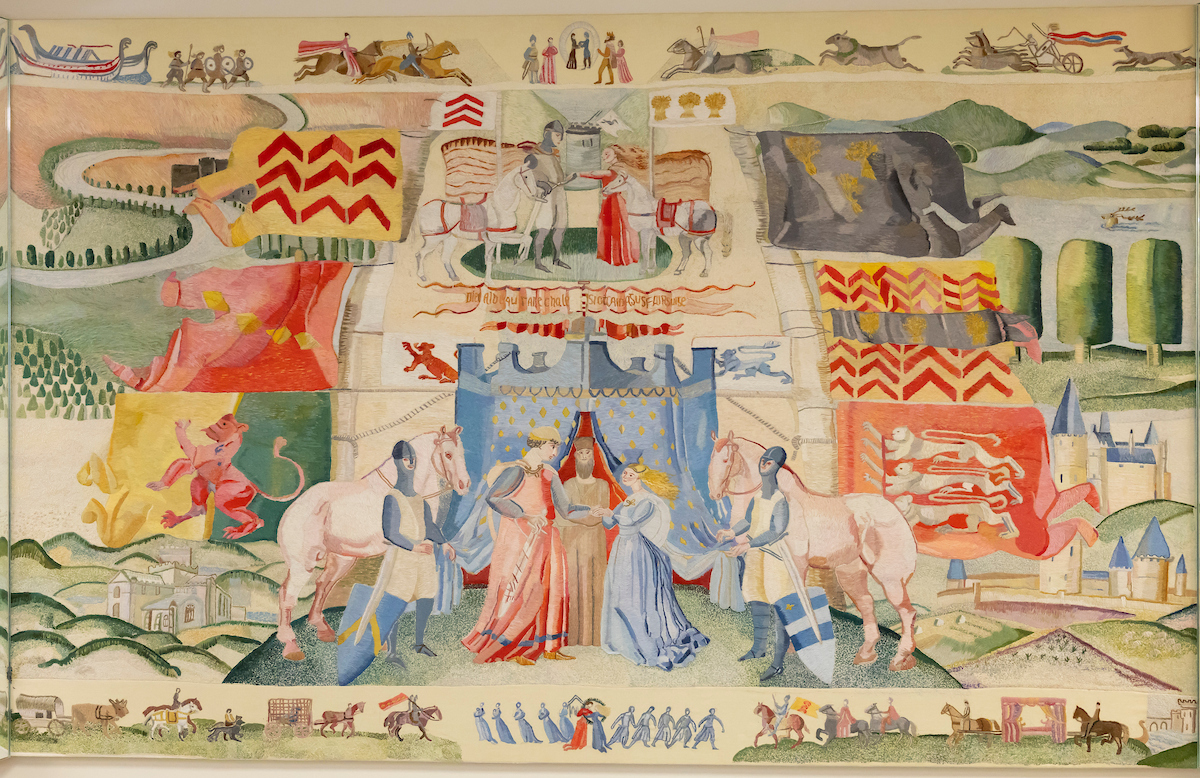
The Marriage of Isabel de Clare and William Marshall
After taking over most of England, the Normans turned their attention to Ireland. When they first arrived on May 1, 1169, it was at the invitation of Dermot MacMurrough, an exiled King of Leinster who requested a motley crew of Norman knights and archers to help him reclaim his throne. Like most visitors to Ireland, they took a shine to the place and decided to settle.
That first landing, on Bannow Beach in Wexford, is depicted in the third panel of the Ros Tapestry on display in the lovely town of New Ross.
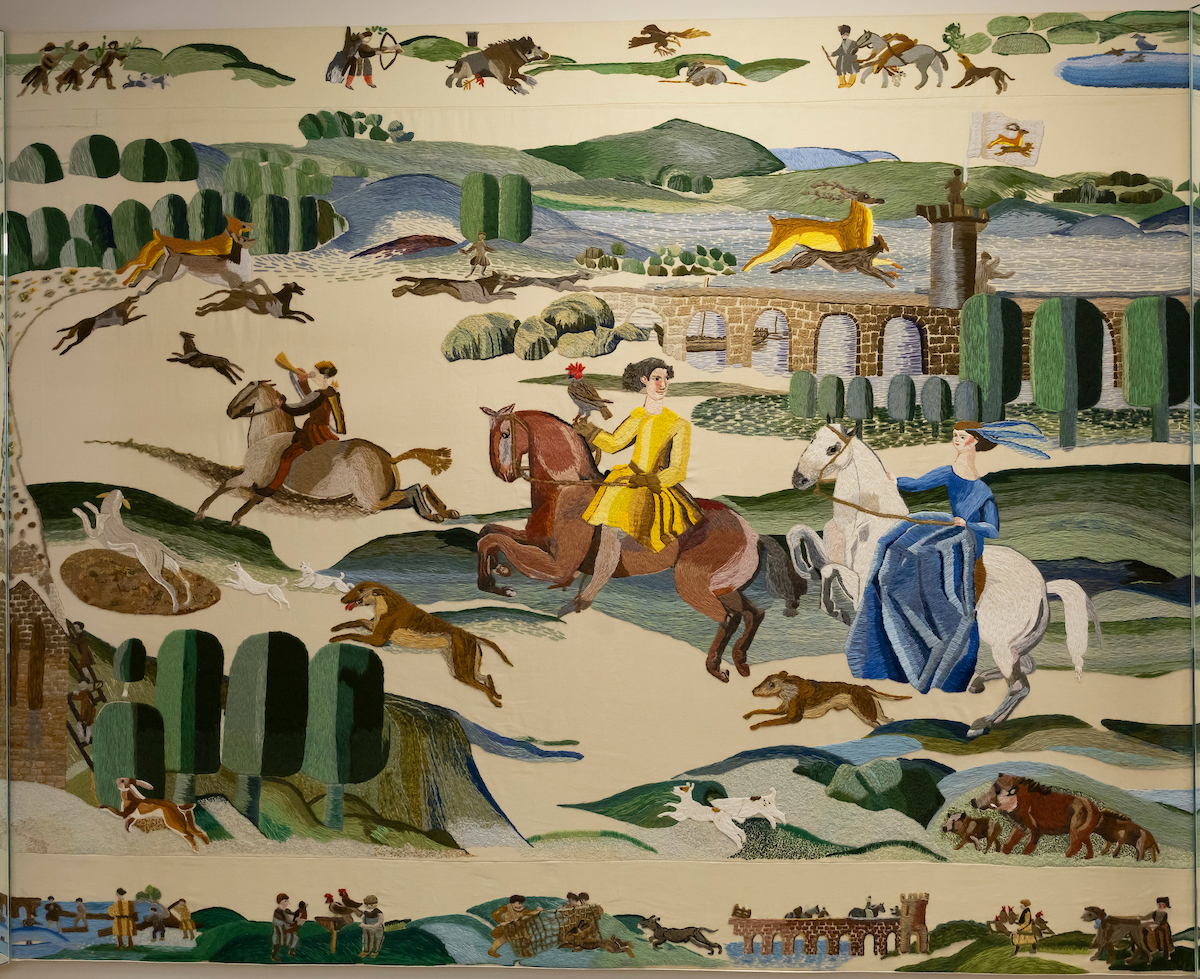
Hunt in the forest of Ros
Started in 1998 as the brainchild of a local priest, the completed tapestries in this series have been hand-stitched by over 150 craftspeople. The project is still in progress and, upon completion, will consist of fifteen tapestries, each telling the story of a different significant event in the history of the town and its surrounding areas.
Not so far away, Kilkenny Castle sits at the center of arguably Ireland’s most enchanting city. That in itself makes it worthy of a visit but for aficionados of tapestries, the castle is a must.
That’s down to the Decius Mus Tapestries on display in one of its grandest halls. Like any good tapestry worth its salt, this series tells the story of a hero. In this case, the valiant, if somewhat hotheaded, ancient Roman consul named Publius Decius Mus, who sacrificed himself in return for victory in battle.
The cartoons for the five pieces displayed in Kilkenny were designed in the early 17th century by the renowned Flemish artist Peter Paul Rubens. Where they were then transformed into tapestries remains the subject of debate. How, and exactly when, they ended up in Ireland is also something of a mystery but according to the castle inventory they’ve been here since at least 1675.
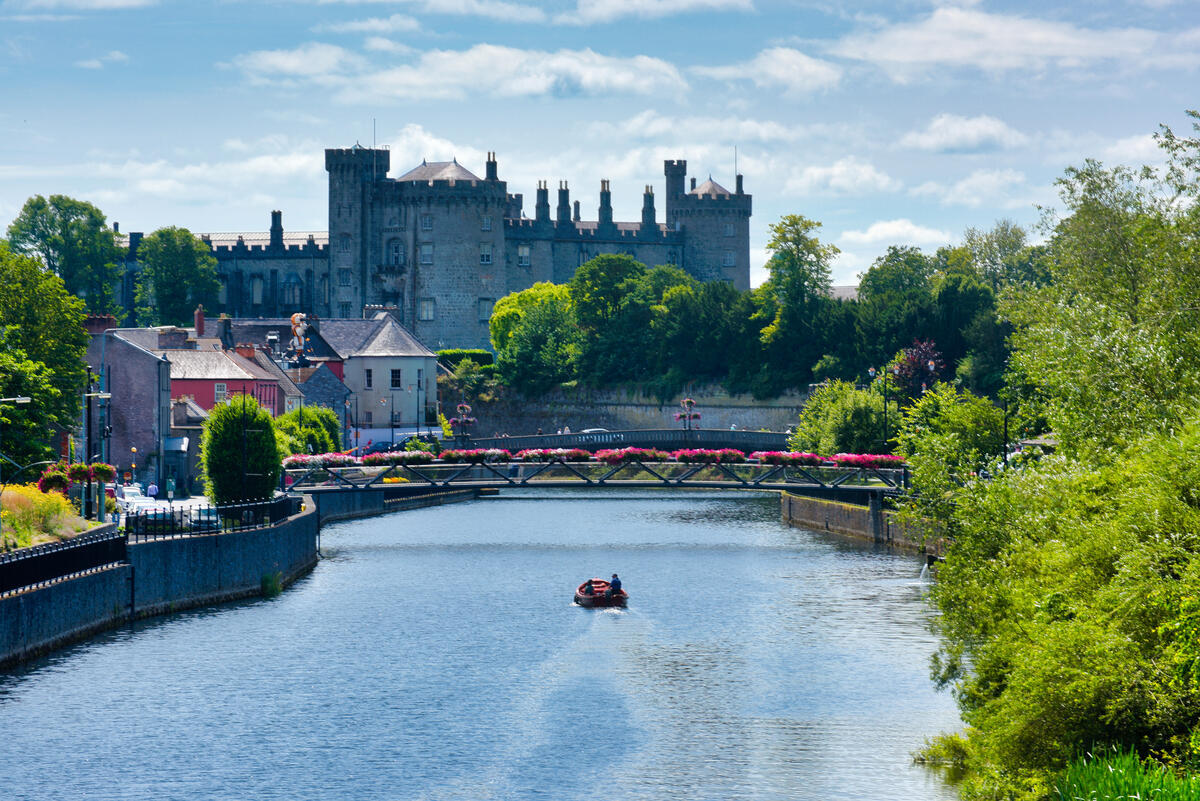
Kilkenny Castle
Recent restoration revealed the extensive use of silk in the tapestries, highlighting the extraordinary skill and craftsmanship involved in their creation. The story of their survival is remarkable and today they remain one of the great treasures of the castle.
Though it is probably more famous for its footballers and ships, Belfast’s wealth was built on linen. By the late 19th century, the fabric had transformed this corner of Ireland from a small market town into an industrial powerhouse known the world over as "Linenopolis".
You’ll see echoes of that tradition today in the 87-metre-long Game of Thrones Tapestry®, part of the permanent collection Ulster Museum which is available to view online. It comprises eight sections, one for each series of the HBO epic. Fans will no doubt recognize many of the weddings, wildfires and wars among the tapestry’s intricate scenes. The beautifully colorful piece took two years to complete by a dedicated and talented team of thirty stitchers. Drawn from museum staff and volunteers from local textile guilds, they worked together on the hand-embroidered highlights, adding intricate detail to the woven fabric and bringing it all to life and showcasing the talent of Irish crafts people still working in Ireland.
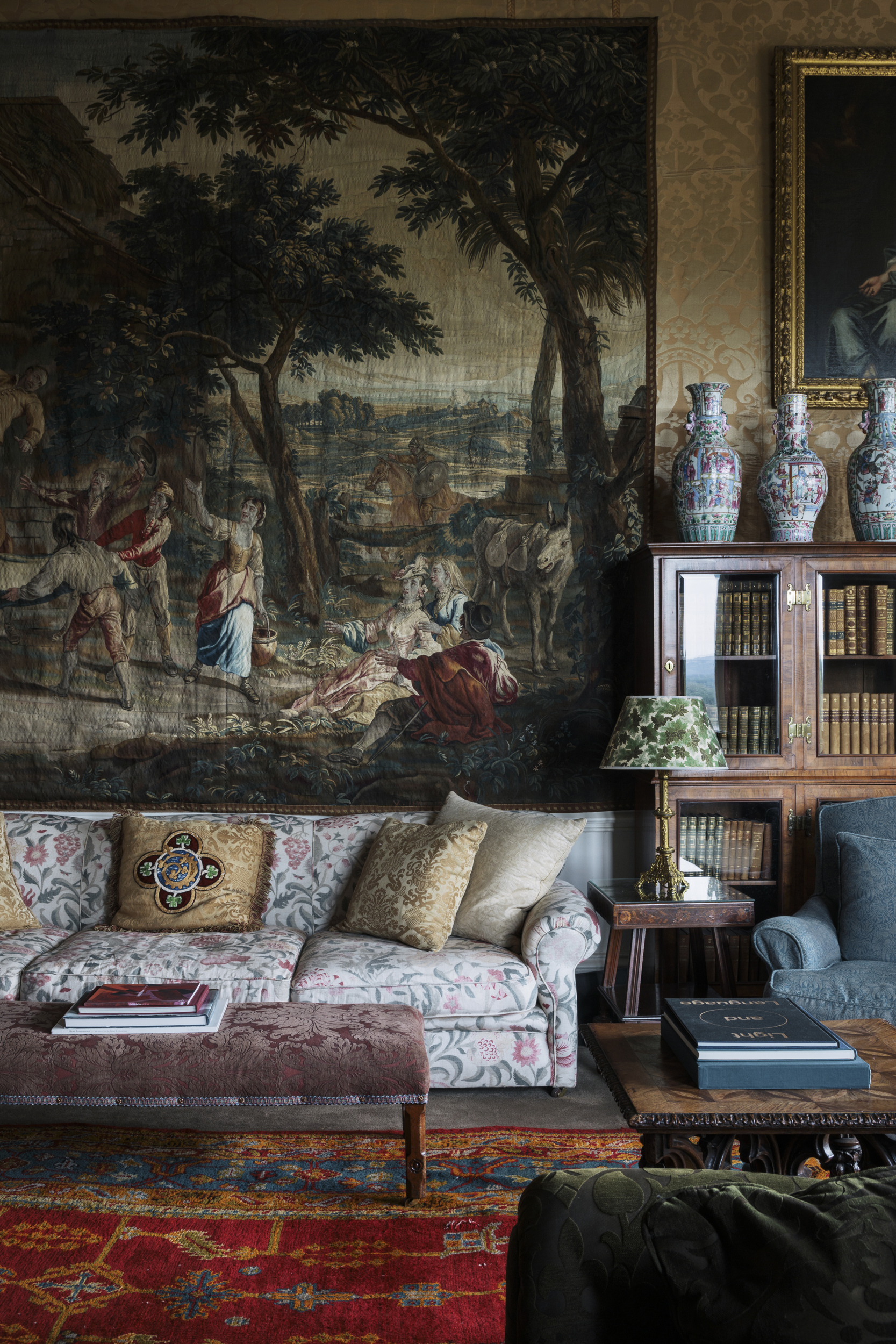
Lismore Castle_Drawing Room
In 2019, the tapestry travelled to Bayeux where it went on display close to the very work that had inspired its creation. The arrival of the Bayeux Tapestry’s so-called Irish cousin caused quite the fuss and attracted tens of thousands of visitors.
Of course, Ireland itself is the ultimate tapestry.
Its colors, its culture, its people, as well as its unique, breathtaking landscapes have been woven together over millennia. So whether you come in search of ancient stories, glorious music or just a weekend away, you will be sure to leave with a rich tapestry of memories and experiences all of your own.
Ireland.com